Technology and Energy Production
Sun, wind, storage and technology – in perfect harmony

Natural conditions
nextgen energy production
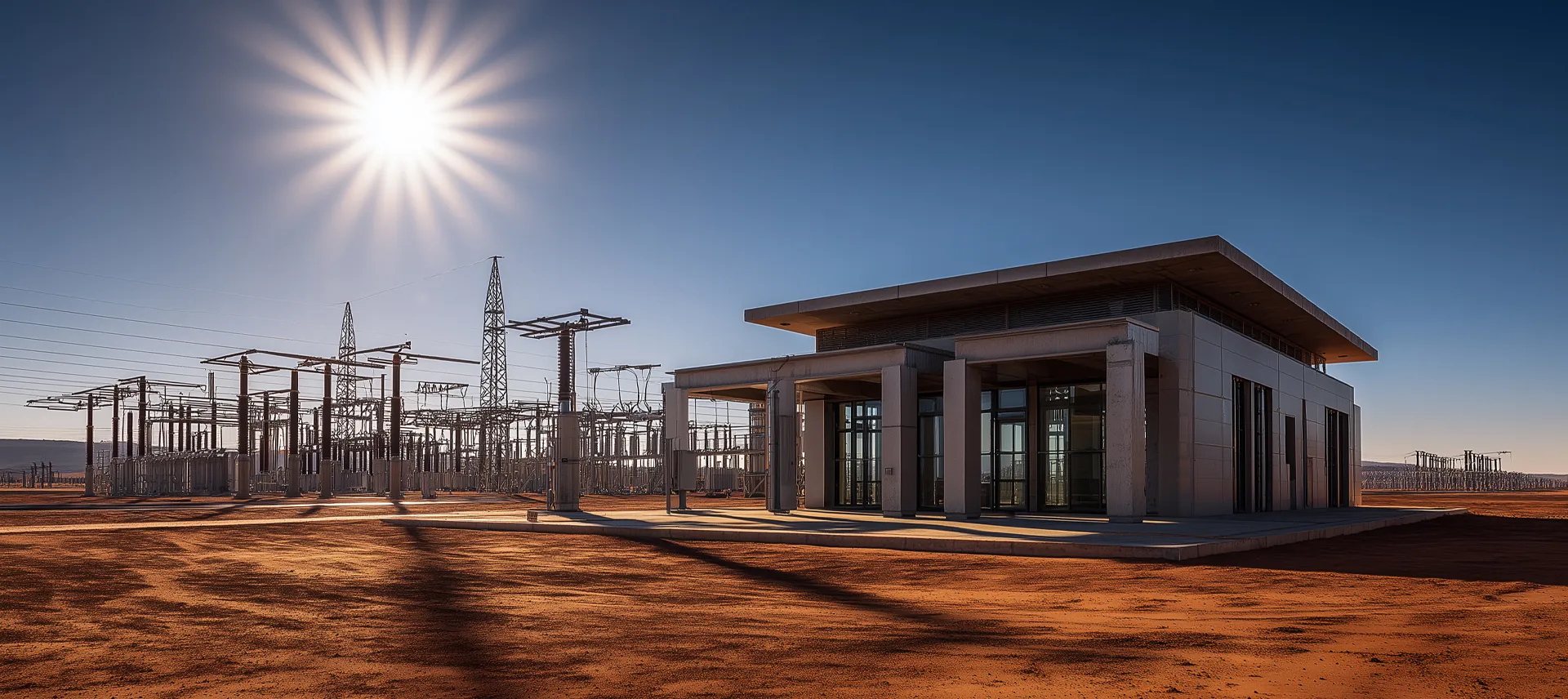
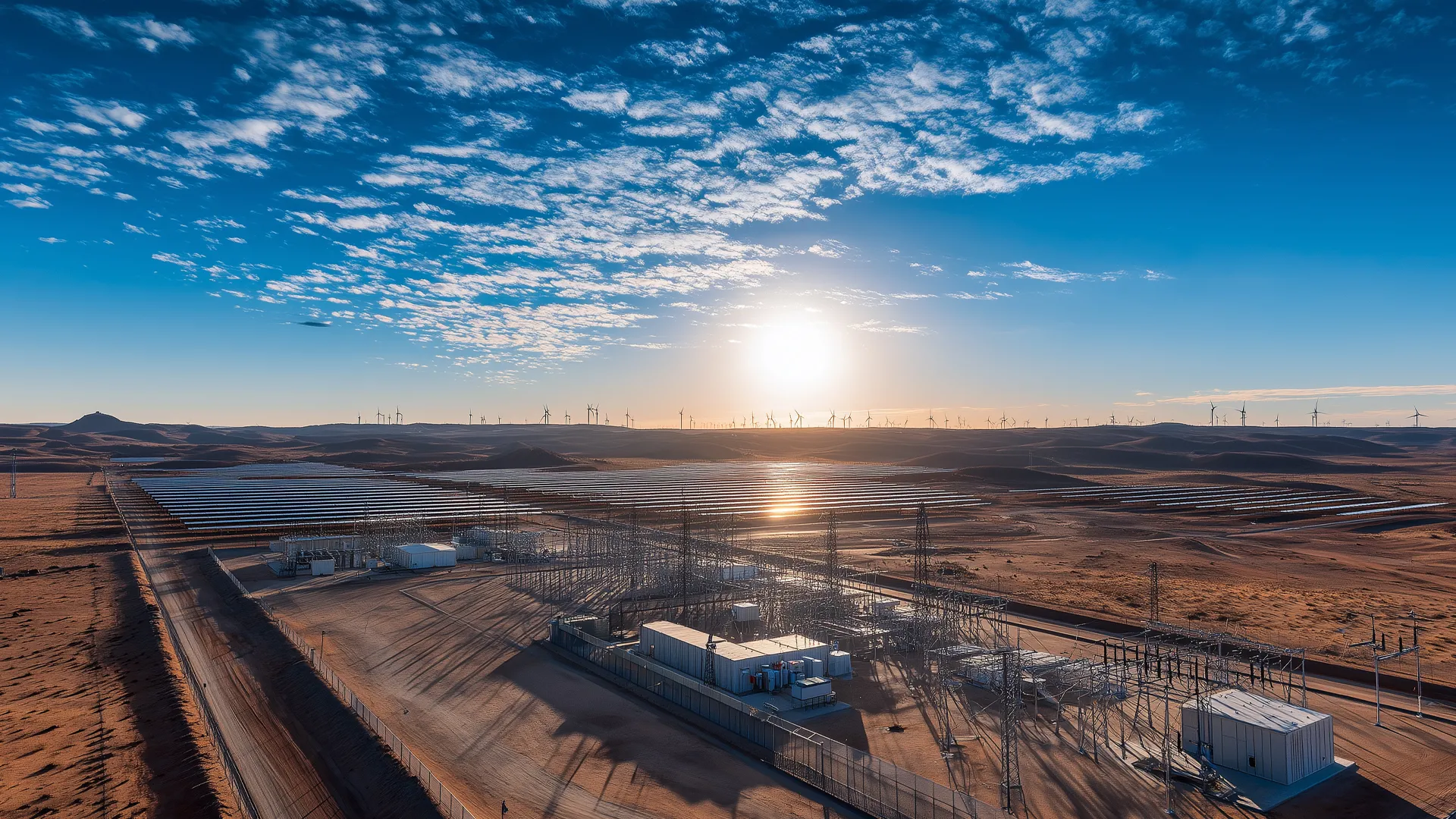
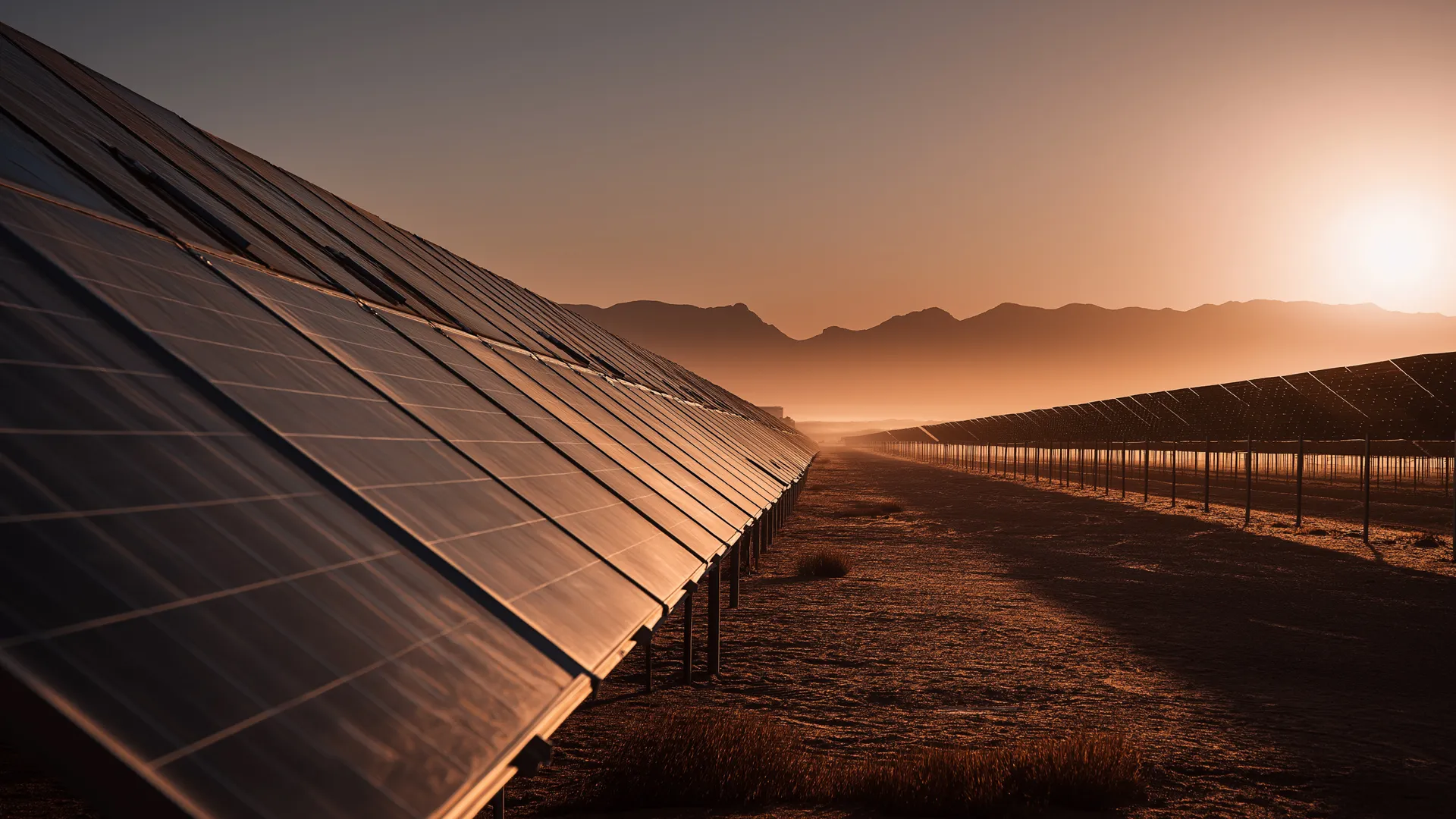
KTE.energy takes advantage of the exceptional natural conditions of the Northern Cape with an annual solar radiation of over 3,000 kWh/m² , combined with constant wind speeds of over 8 m/s.
This unique combination enables one of the highest energy yields in the world and creates the basis for a permanently stable, CO₂-neutral power supply.
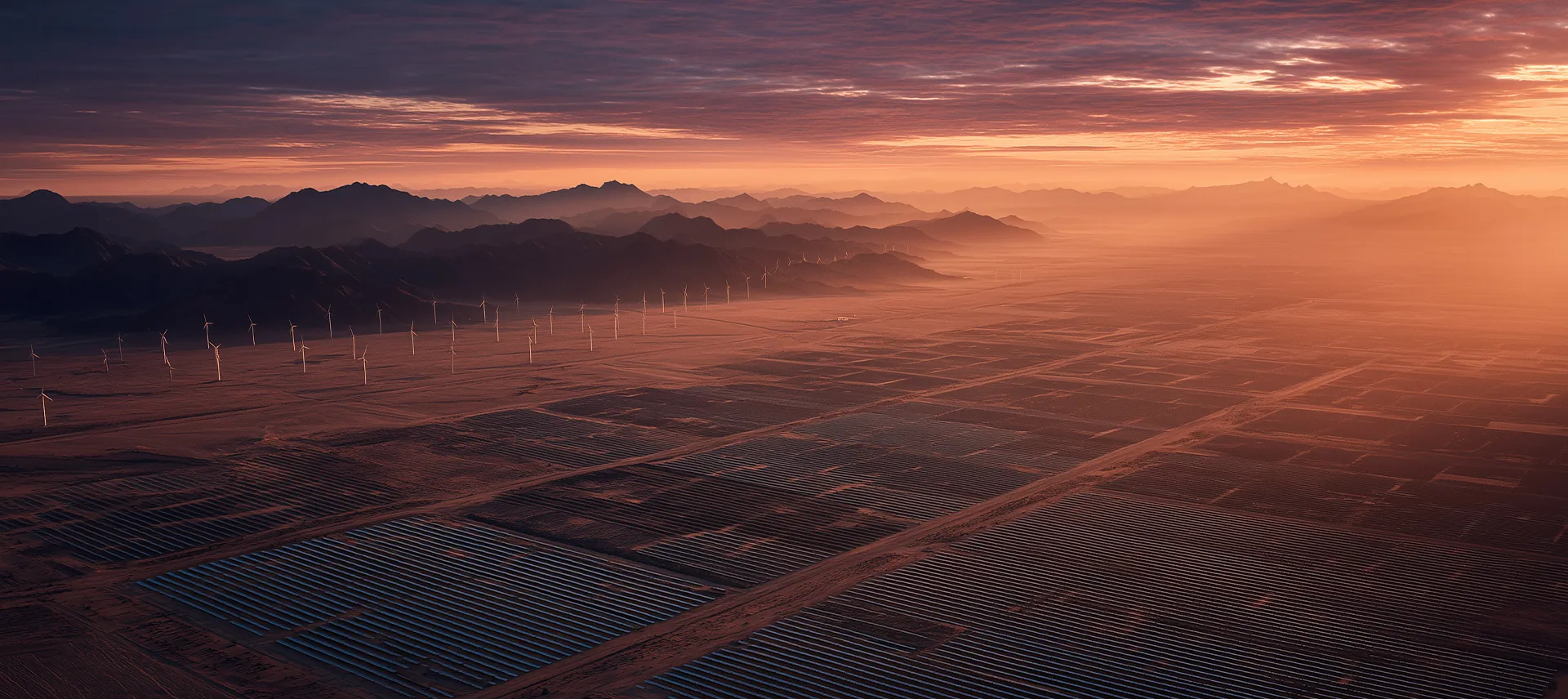
In the first project phase (until 2030), photovoltaic and wind power plants with a combined capacity of up to 6 gigawatts (GW) will be built , complemented by large-scale battery storage solutions that capture surplus solar and wind power and ensure baseload electricity production around the clock – 24 hours a day, 365 days a year . In parallel, an electrolysis capacity of up to 3.5 GW will be built to produce green hydrogen and hydrogen-like derivatives.
Final expansion phase
Global Energy transition
In the final expansion phase by 2040, the total capacity will be increased to 20 GW (solar + wind) and 11 GW electrolysis – a milestone for the global energy transition.
Thanks to the ideal location conditions, KTE.energy achieves world-leading low levelized cost of electricity (LCOE) , setting new standards for efficiency, security of supply and economic viability in the field of renewable energies.

Technological approach
Green molecules – The new currency of energy
From the sun to the molecule
Green hydrogen is produced from solar and wind power in modern electrolyzers . This serves as a starting material for green ammonia and e-methanol – two energy and transport carriers that are in high demand in global markets such as Europe and Asia.
Production takes place directly on the project site. Part of the hydrogen produced will be used locally, while the majority will be transported via the planned GreenLink corridor to the western industrial and export port in Velddrif / Saldanha Bay.
Value chain
Global Energy transition
This closed chain creates energy, water and industrial cycles that generate added value locally and reduce emissions globally.
- Generation of electricity from sun and wind
- Electrolysis to split water into hydrogen and oxygen
- Synthesis to ammonia or e-methanol
- Transport & export via GreenLink to the seaport
- Use in industry, energy supply, shipping and mobility
Stay up to date
sign up to receive the latest news of south africas energy future